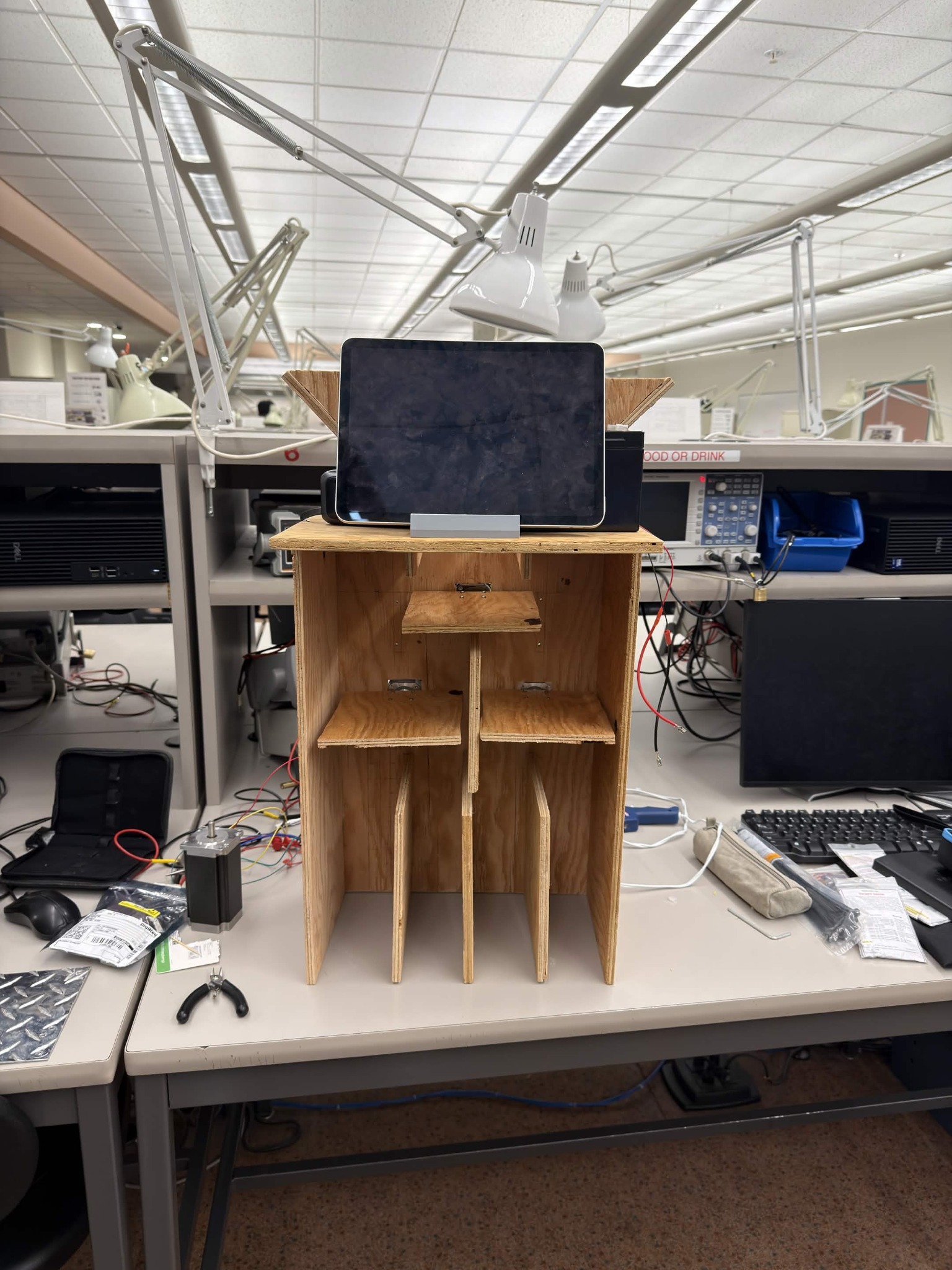
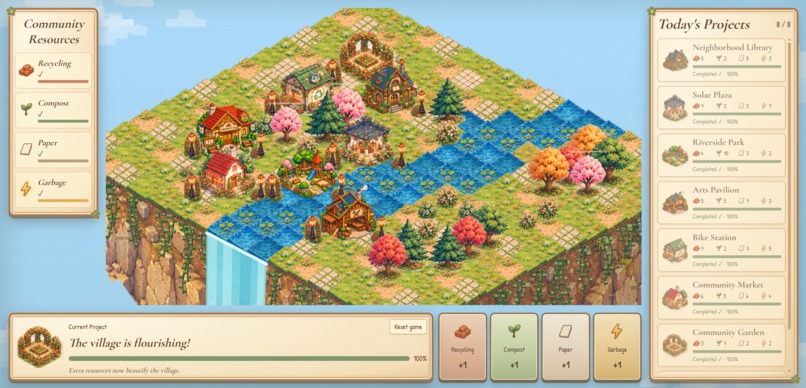
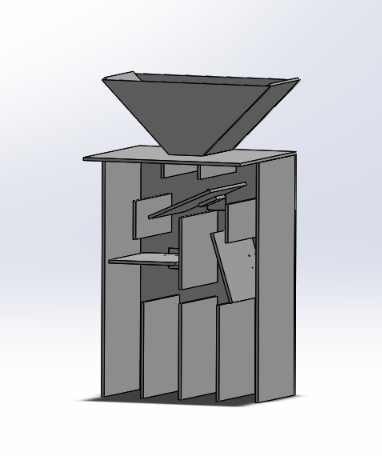
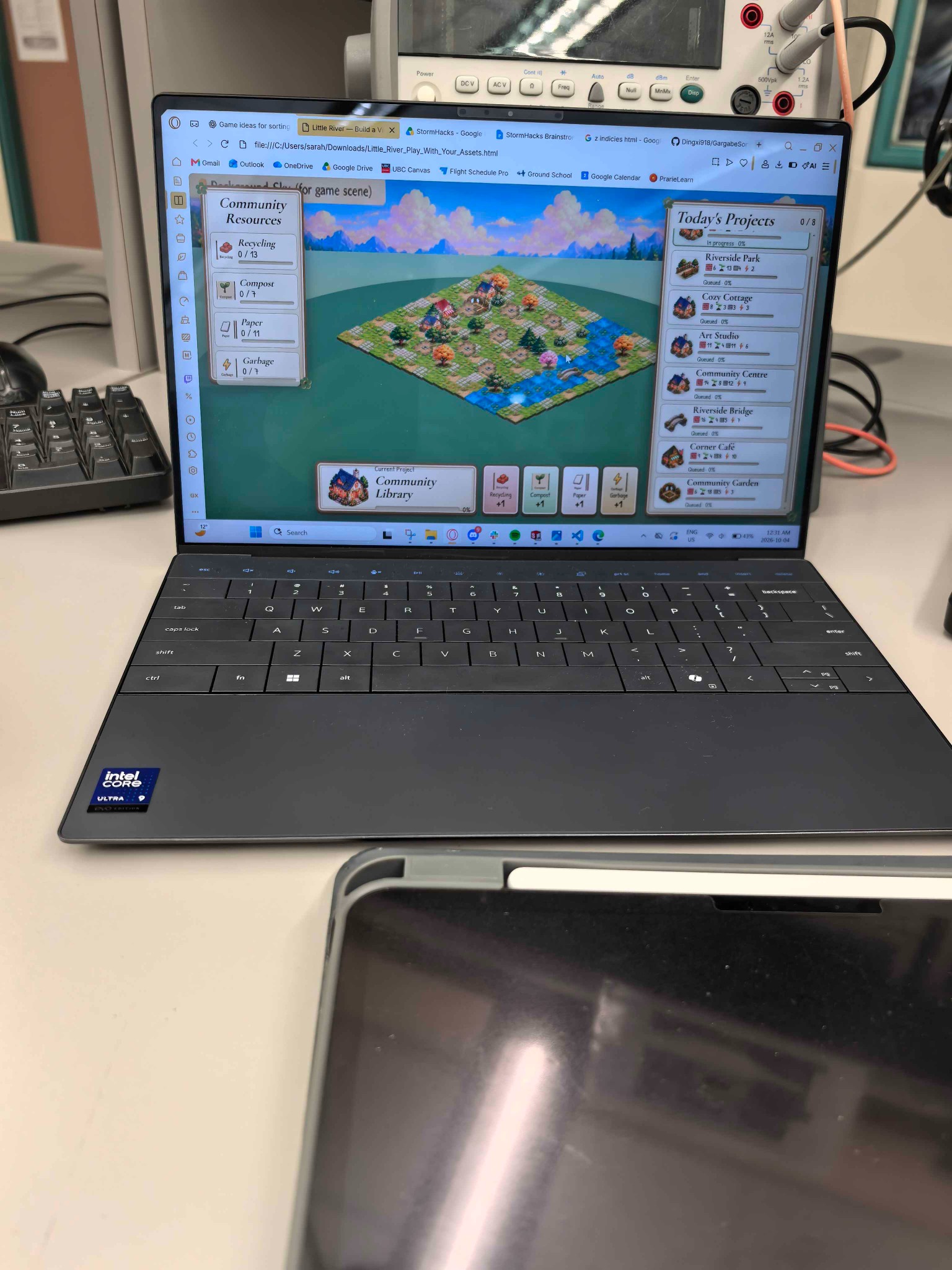
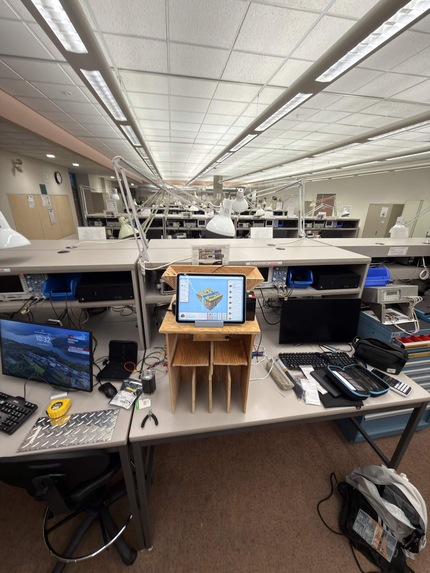
Designed and built an automated waste-sorting system connected to a collaborative city-building game that turns everyday waste into resources for developing a virtual city. The system uses AI image recognition to classify waste, physically sorts it into the appropriate category, and updates a shared game where users can see their contributions help build their community.
Hardware & Mechanical Design
Designed and 3D modeled mechanical components using CAD, then manufactured and assembled parts using 3D printing and other fabrication methods.
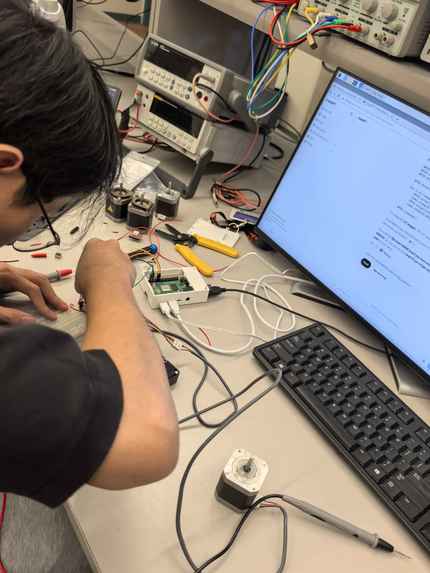
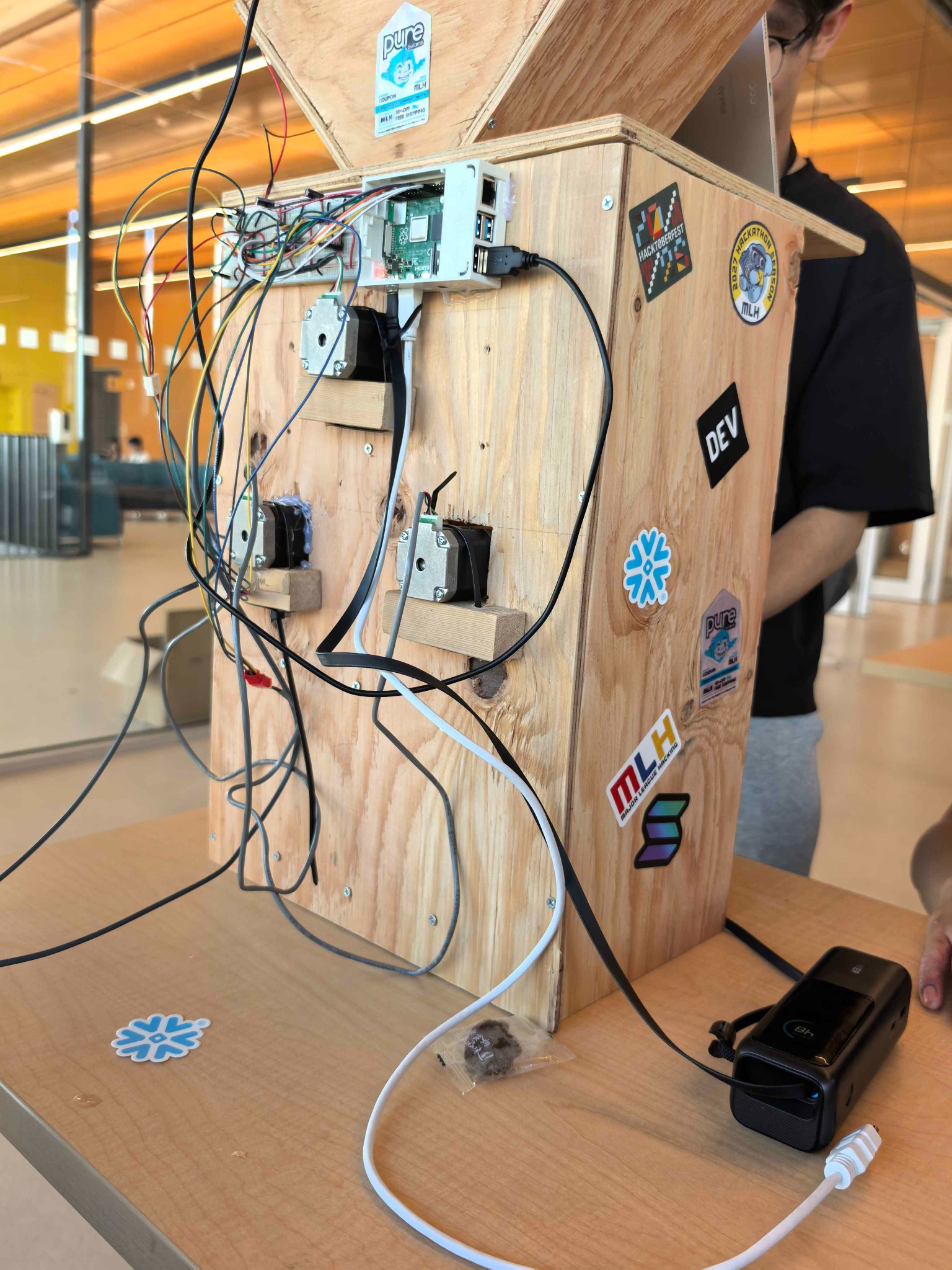
Integrated Raspberry Pi, ESP32, stepper motors, sensors, and a camera into an automated waste-sorting mechanism.
Developed motor-control code and troubleshot mechanical tolerances, motor performance, and manufacturing issues.
Computer Vision & Embedded Systems
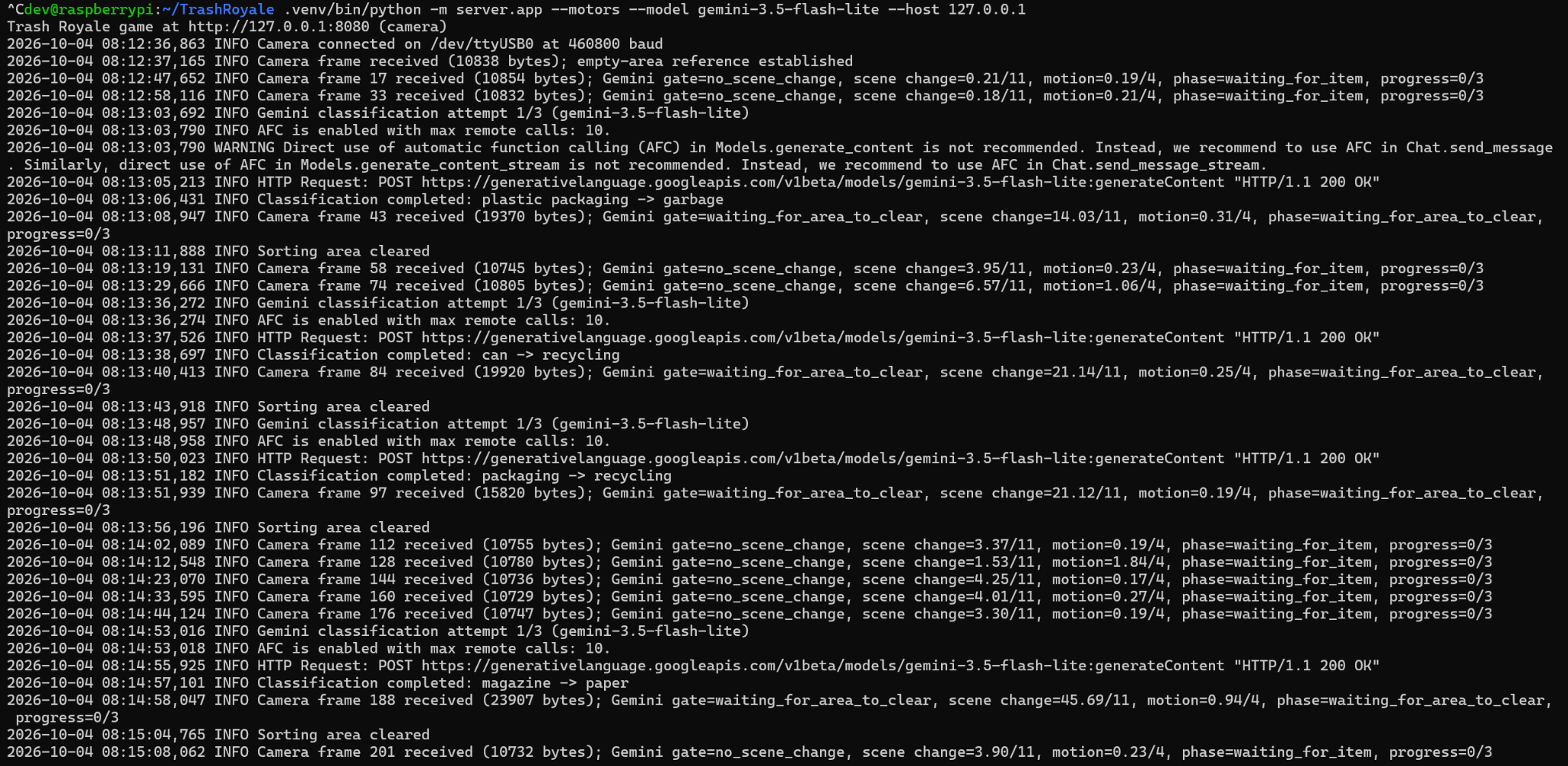
Integrated the Gemini API to classify waste from camera images into recycling, compost, paper, and garbage.
Implemented wired UART/USB communication to transfer image data between devices.
Connected waste classifications to the physical sorting mechanism and game resource system.
Game & Backend Development
Developed a collaborative city-building game featuring procedurally generated maps, construction projects, resource management, and daily quests.
Implemented progressive building animations that visually reflect resource contributions.
Built and publicly hosted backend infrastructure using Python and Cloudflare to manage game data and connect the hardware to the virtual environment.
Challenges & Takeaways
Integrated mechanical, electrical, embedded, and software systems into a working prototype.
Troubleshot 3D-printing tolerances, stepper motor control, sprite inconsistencies, and software integration issues.
SoupPLY is a restaurant inventory management application developed during a hackathon focused on making a positive impact. Our team tackled restaurant food waste with a desktop app that tracks inventory, records food waste, and predicts ingredient orders using historical data.
Frontend Development
Built a React interface with a prediction dashboard, checkout overview, and food-waste logging page.
Integrated a teammate’s order-prediction algorithm, displaying recommended ingredient quantities based on historical inventory, ordering, and waste data.
Developed an interactive checkout system to add ingredients, edit quantities, remove items, and review predicted orders before submitting.
Used React hooks, including useState and useEffect, to manage application state, user inputs, and inventory updates.
Connected the frontend to the Electron backend through IPC to retrieve inventory, submit orders, and record food waste.
Designed navigation tabs, interactive forms, and highlighted predicted orders with CSS.
Application Features
SQLite database for inventory, order history, and food-waste records.
Data-driven order recommendations based on historical ingredient consumption and waste.
Automatic inventory updates when orders or waste records are submitted.
ReactElectronSQLiteIPCCSS
ENGINEERING DESIGN · ENERGY
Dual-Motor Hydroelectric Generator
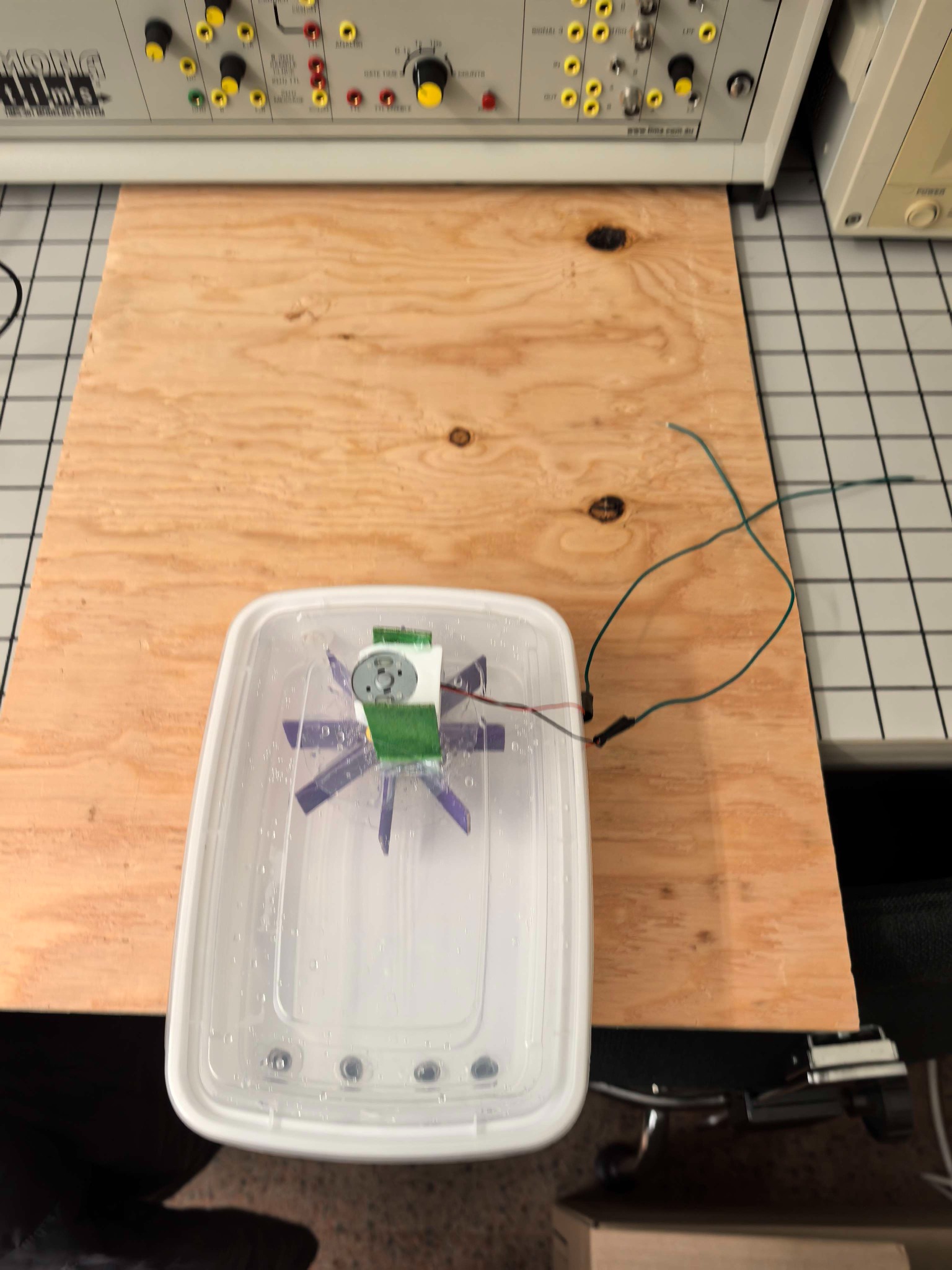
Our team was challenged to build a water-powered generator from limited materials, maximizing electrical output while minimizing water loss.
Design & Development
Explored several concepts, including larger enclosures and a Plinko-inspired water-flow system, before choosing a simpler waterwheel design.
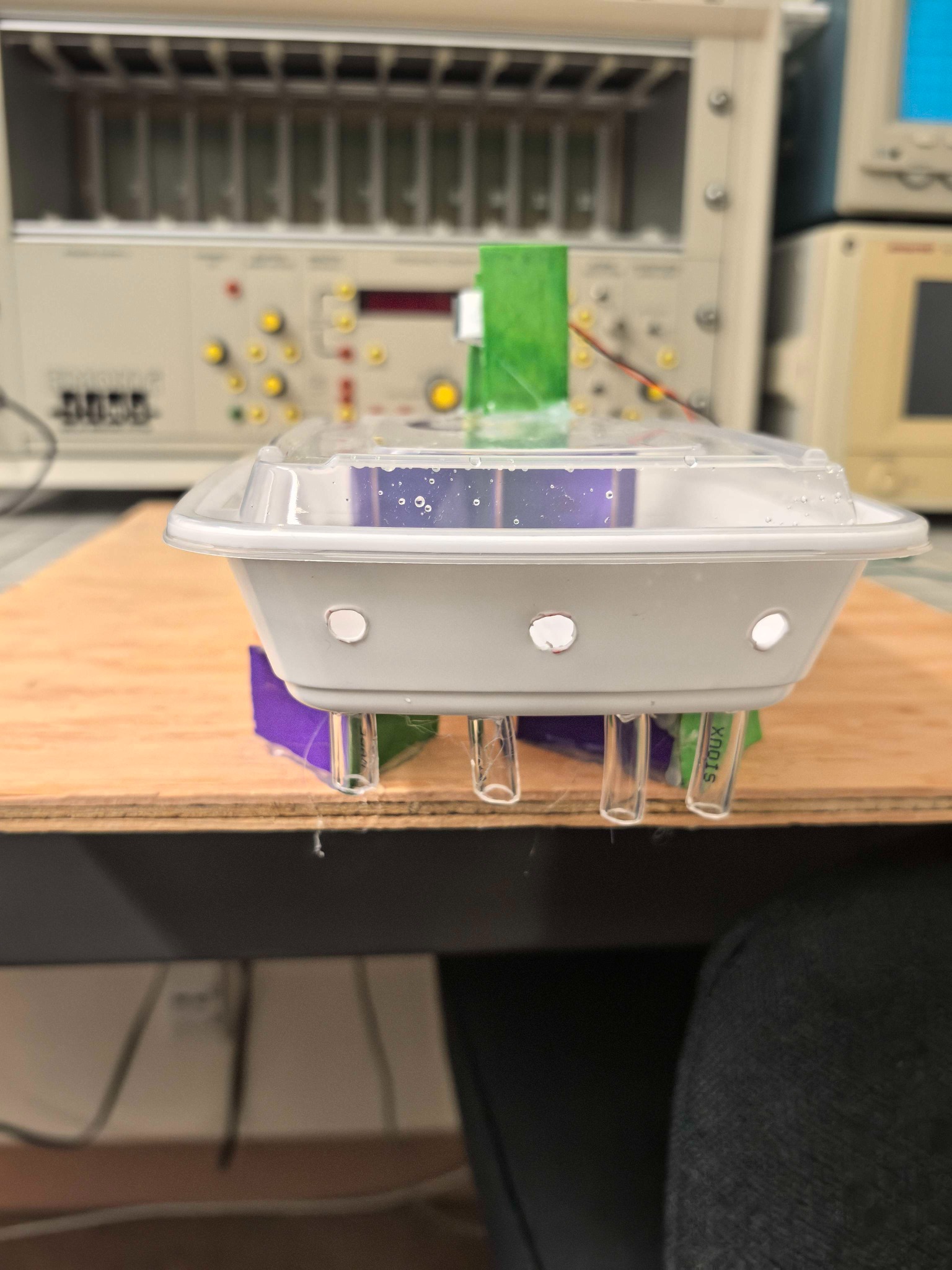
Built an enclosed system from competition materials, with two motors mounted on opposite sides of a central waterwheel.
Designed blades that rotate under a hose-fed water stream, transferring mechanical energy to the motors to generate electricity.
Used the surrounding enclosure to contain the water and achieve zero water loss during testing.
Results & Takeaways
Placed second in the Senior Design category at our competition location.
Learned to balance design complexity, material constraints, and practical implementation under time pressure.
Identified that connecting the motors in series rather than parallel could have increased measured voltage.
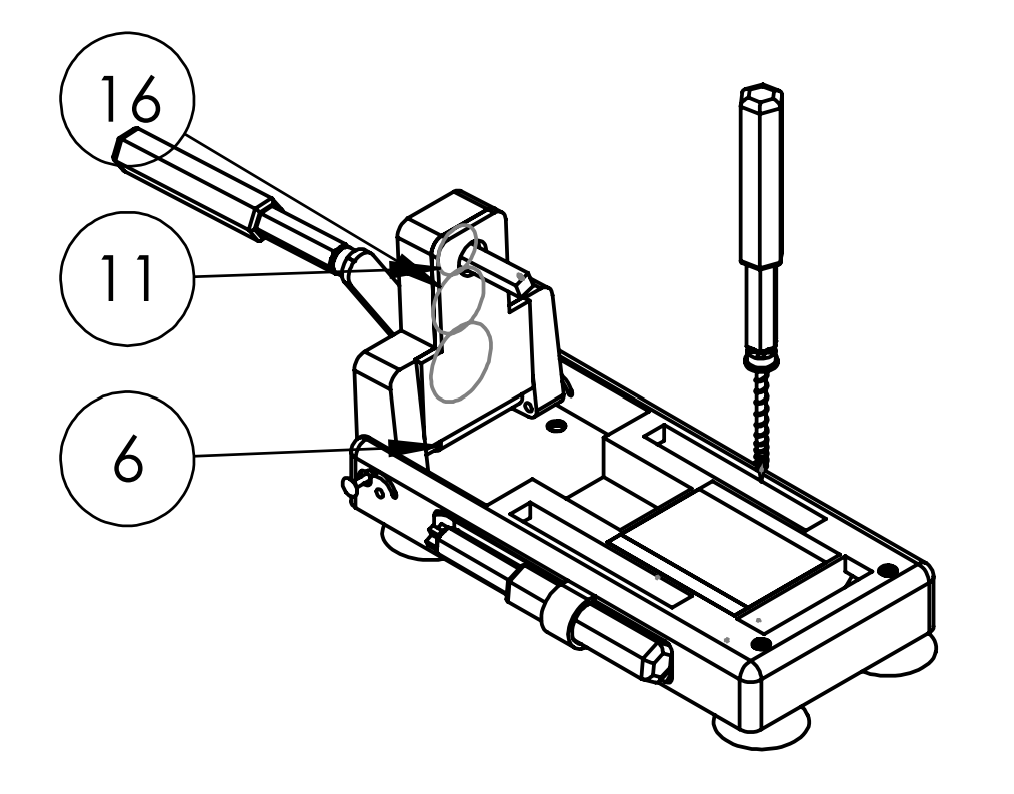
Designed as part of a Mechanical Design and Drafting course, Camp-a-Cook is a modular camping kitchen inspired by interchangeable appliances. A central base supports a cheese grater, apple peeler, and meat grinder, combining several food-preparation tools in one compact, portable system without electricity.
Mechanical Design & CAD
Designed the central base module in SolidWorks as a common platform for three interchangeable attachments.
Developed gear arrangements and worked on gear meshing to transmit mechanical motion through the base.
Designed folding mechanisms to improve portability and compact storage.
Modeled and integrated components while considering their position, movement, and compatibility with the attachment system.
Design Considerations
Focused on modularity so multiple kitchen tools could use a shared mechanical platform.
Considered how the gears, folding mechanisms, and attachment interfaces would fit together in one assembly.
Applied mechanical design principles to develop a compact, electricity-free cooking-device concept.
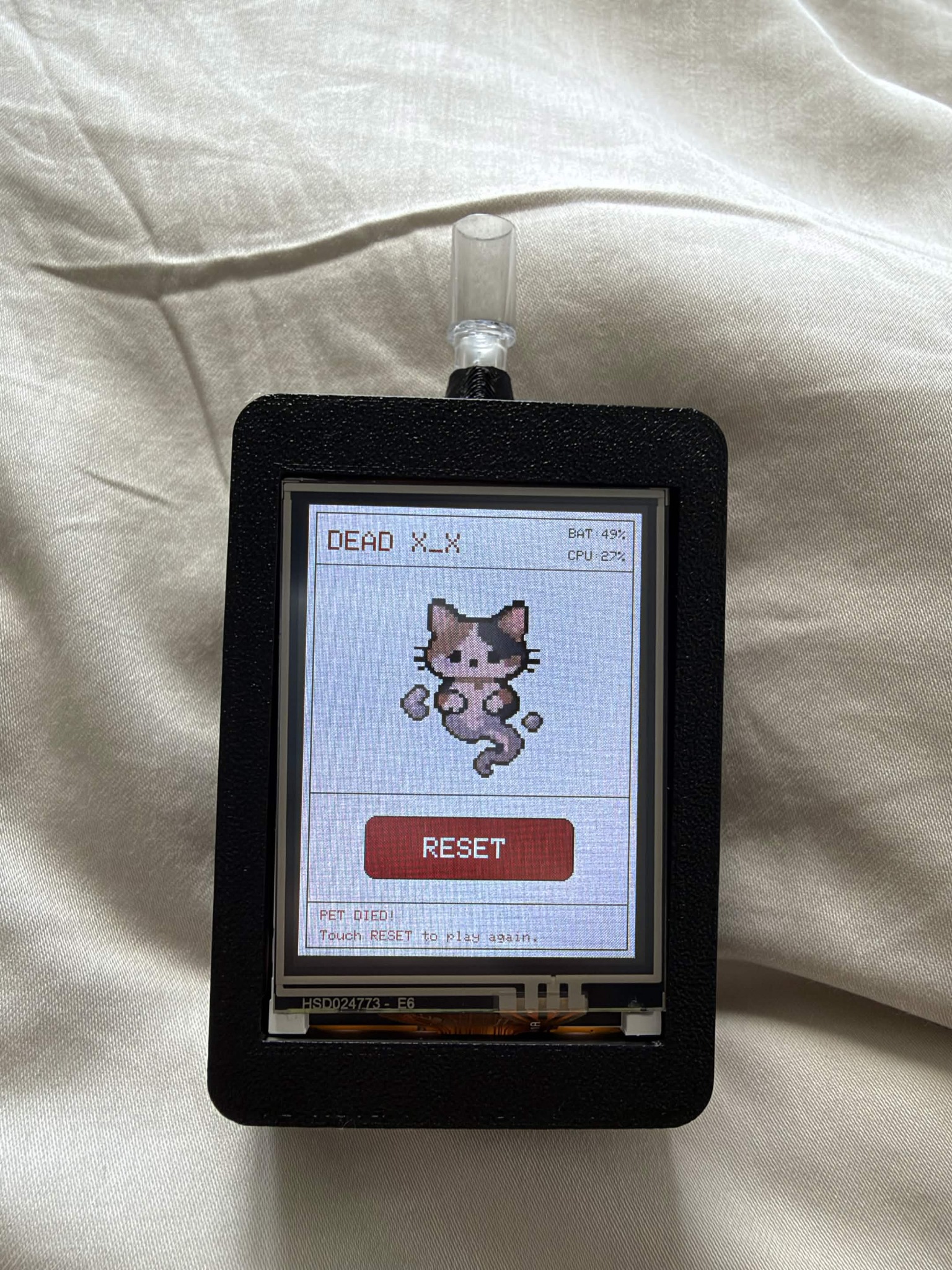
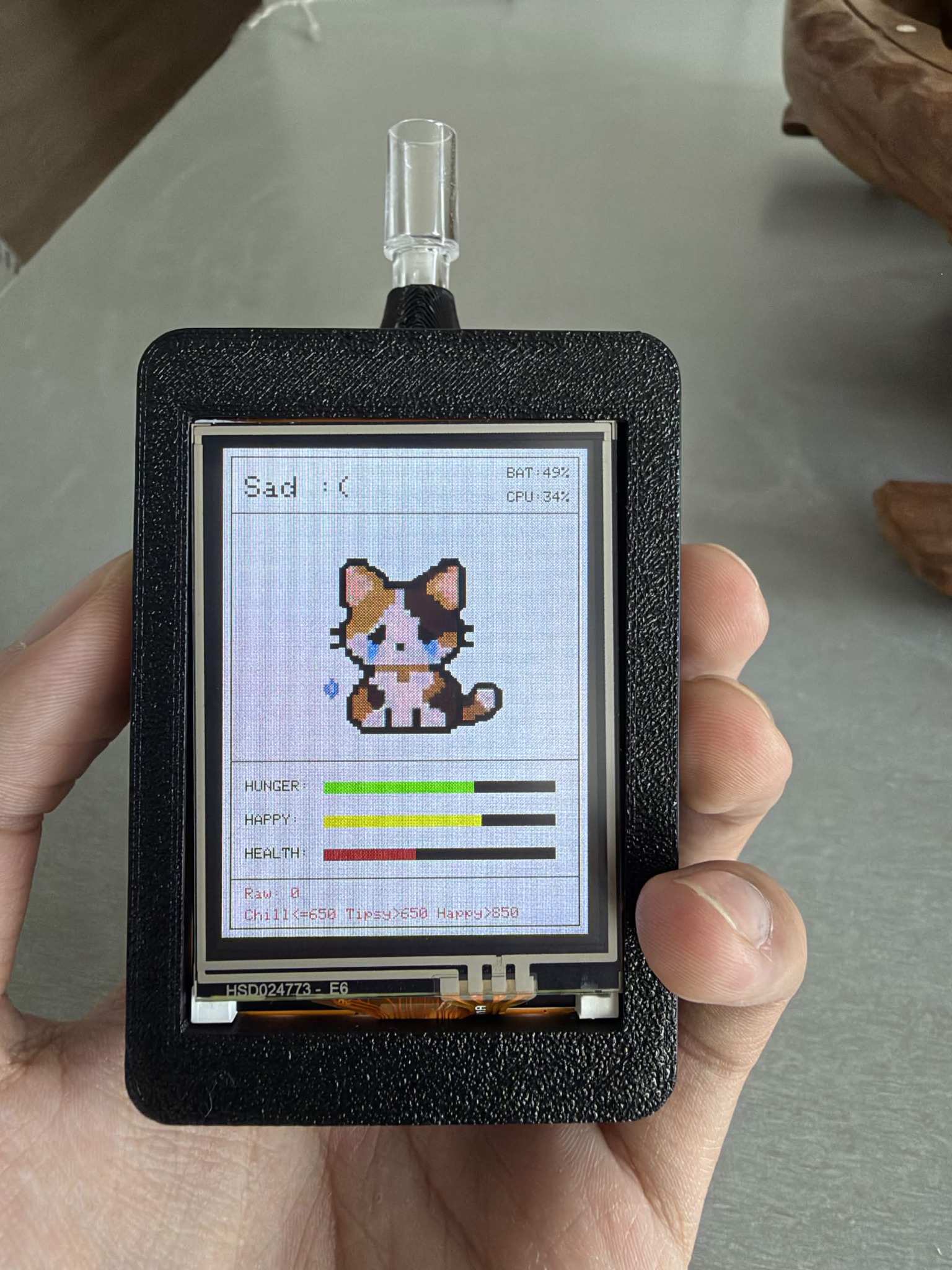
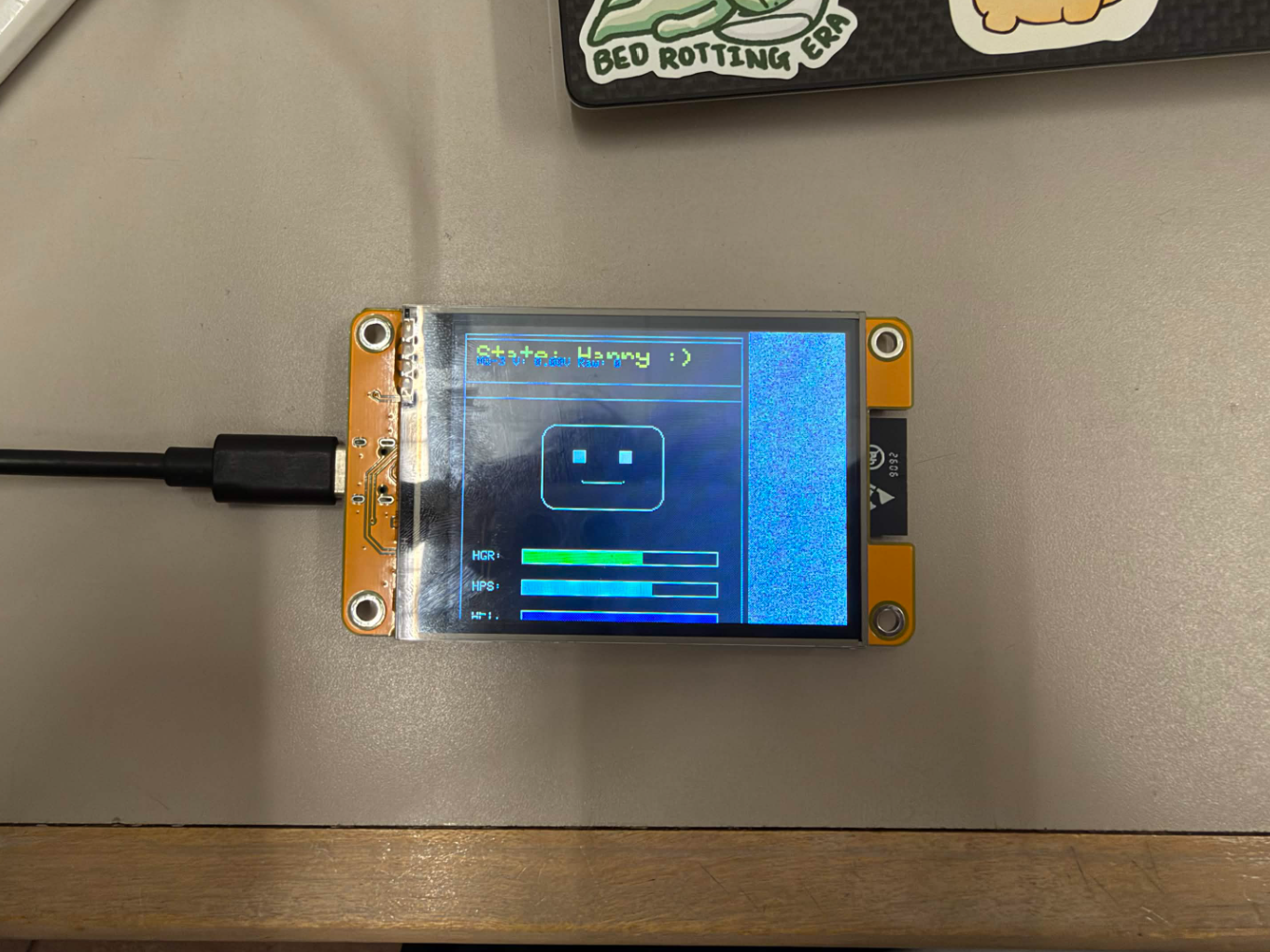
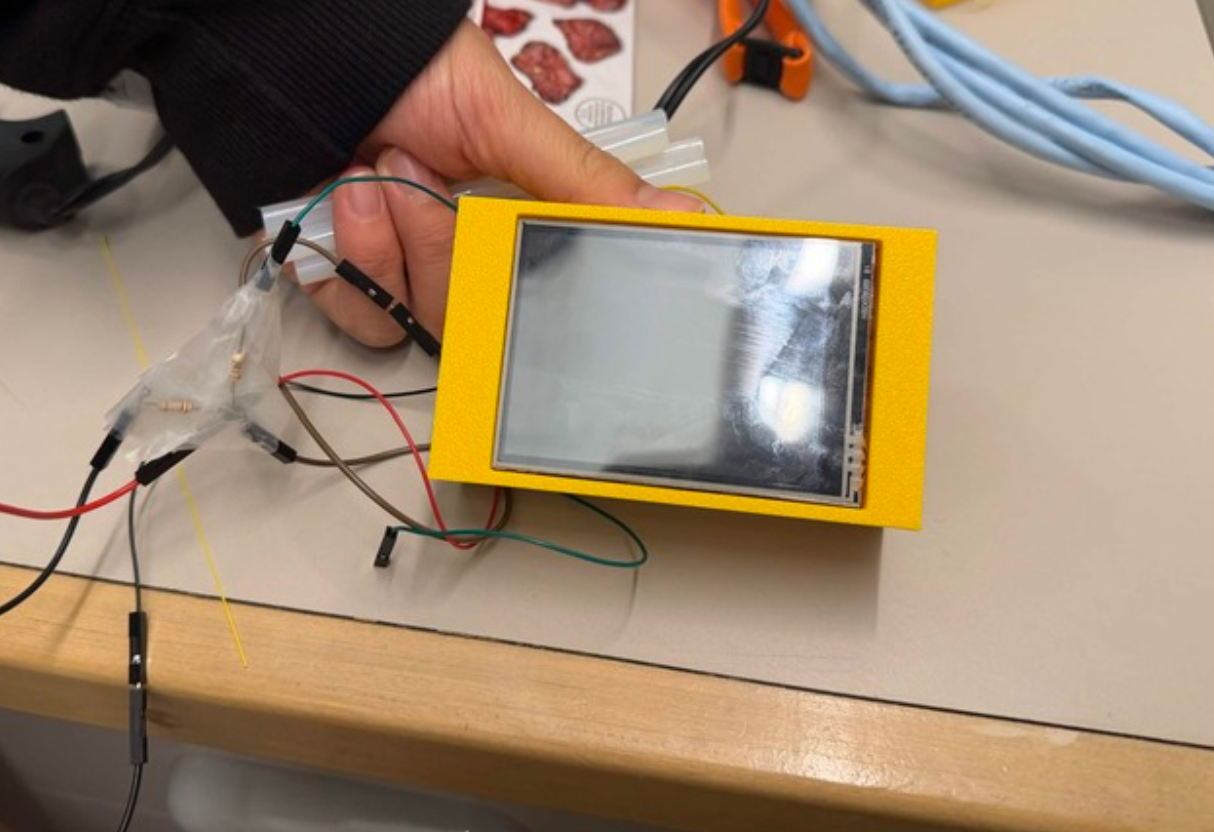
Designed and built a multiplayer party game where breathalyzer readings feed virtual Tamagotchi pets. Each player uses a handheld module with an MQ-3 sensor and touchscreen; readings affect the pet’s health, happiness, and hunger. A central host dashboard tracks player statistics and manages gameplay.
Hardware & Embedded Systems
Built wireless player modules using ESP32-based CYD touchscreen displays, MQ-3 alcohol sensors, and 3.7V batteries.
Programmed ESP32 modules in C++ with TFT_eSPI to display animated pet sprites, process sensor readings, and communicate over Wi-Fi.
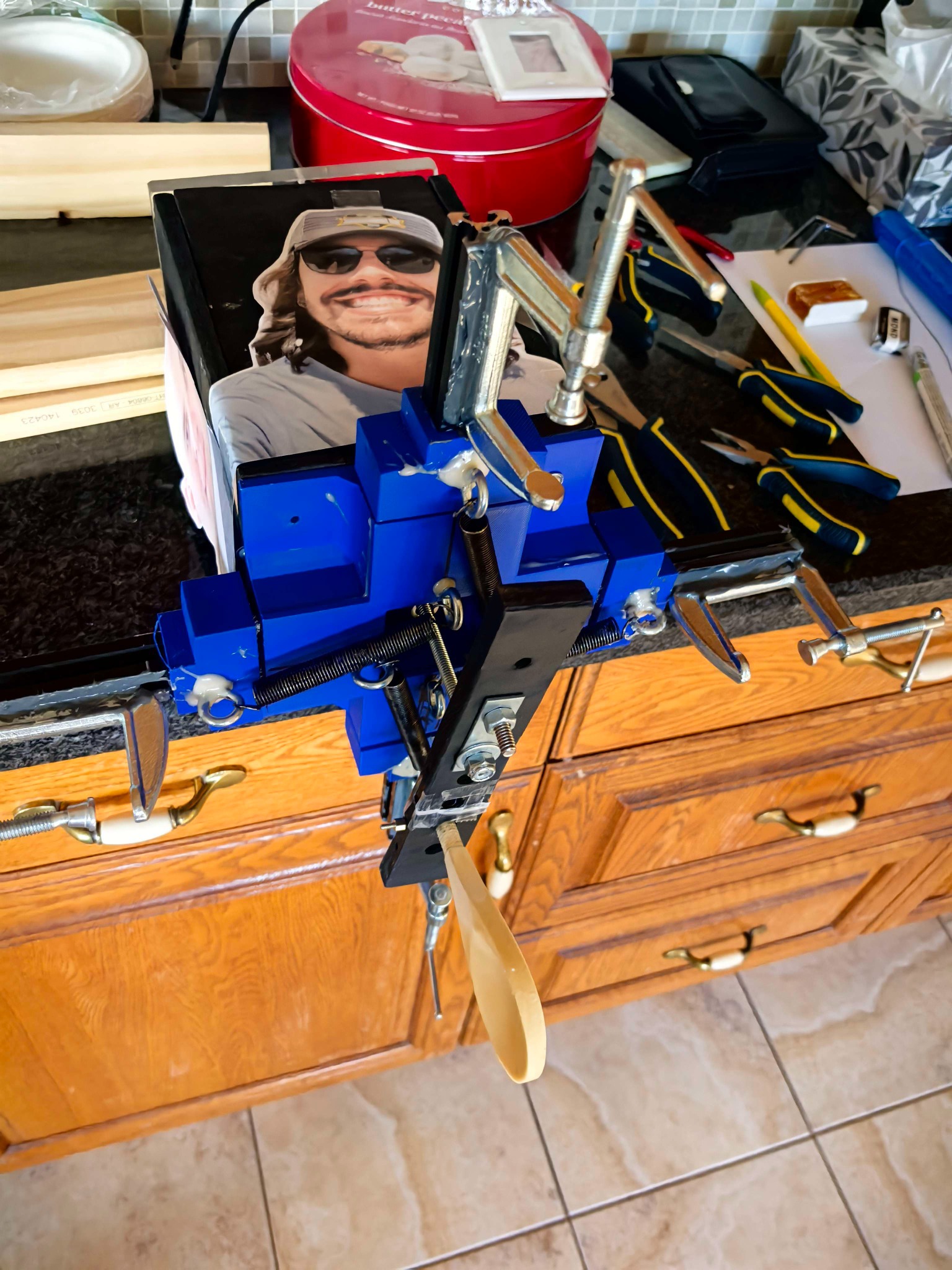
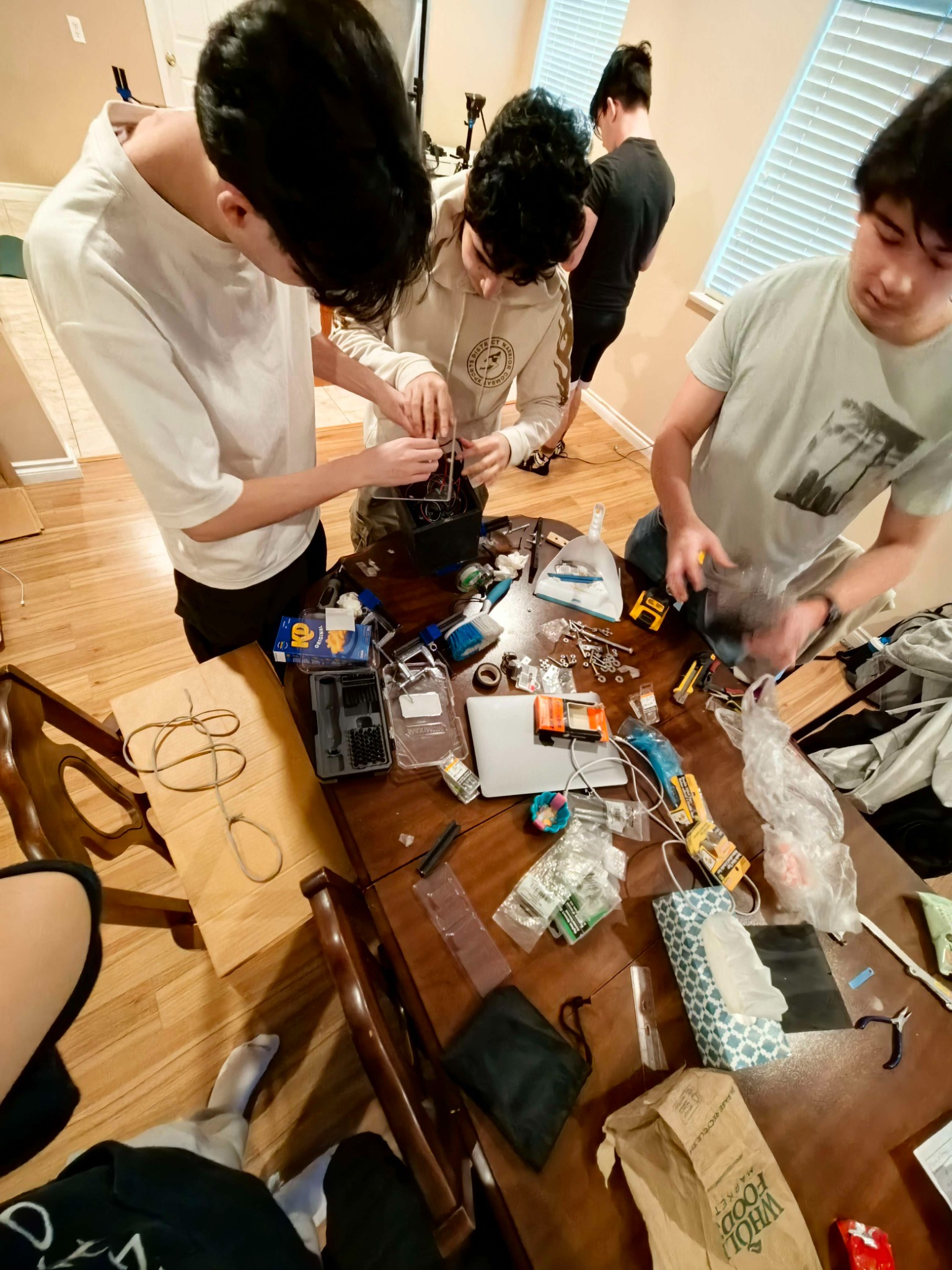
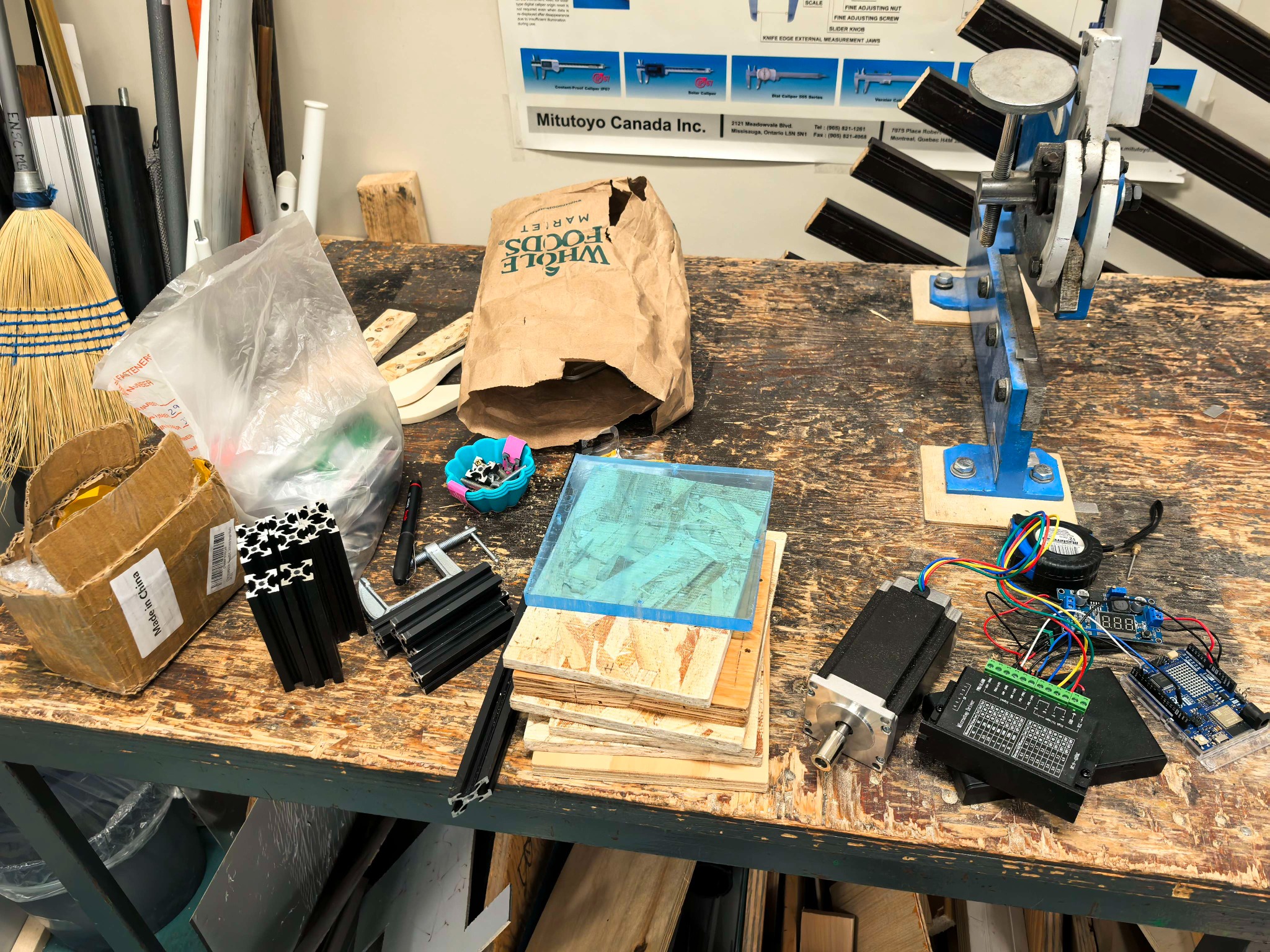
PotRider X7 is an automated pot-stirring robot designed to reduce manual effort in commercial kitchens. Developed as part of a first-year engineering design course at SFU, the robot uses an adjustable clamping system, motor-driven stirring mechanism, and Arduino-based controls to automate stirring across different pot sizes.
Mechanical Design & Prototyping
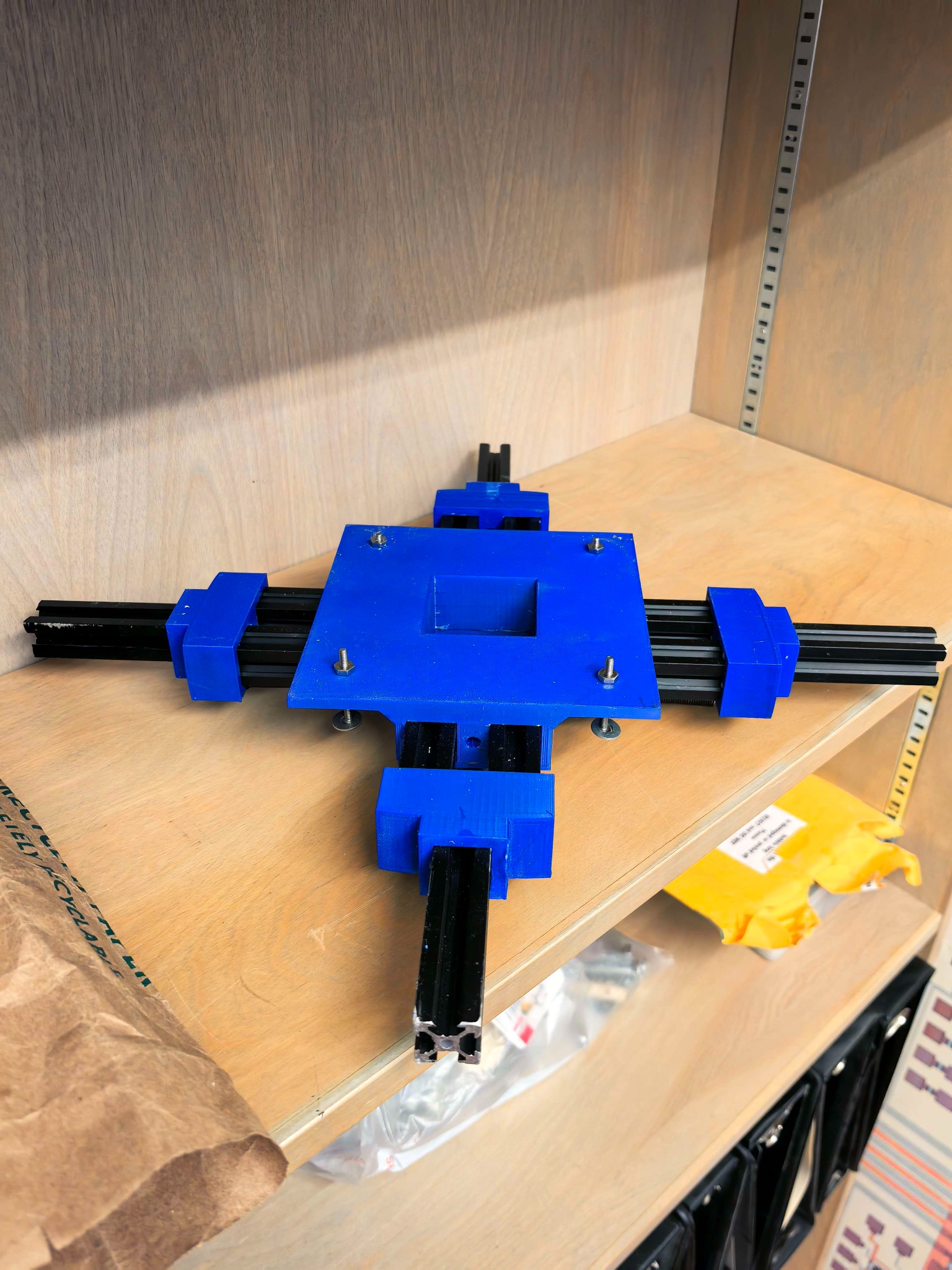
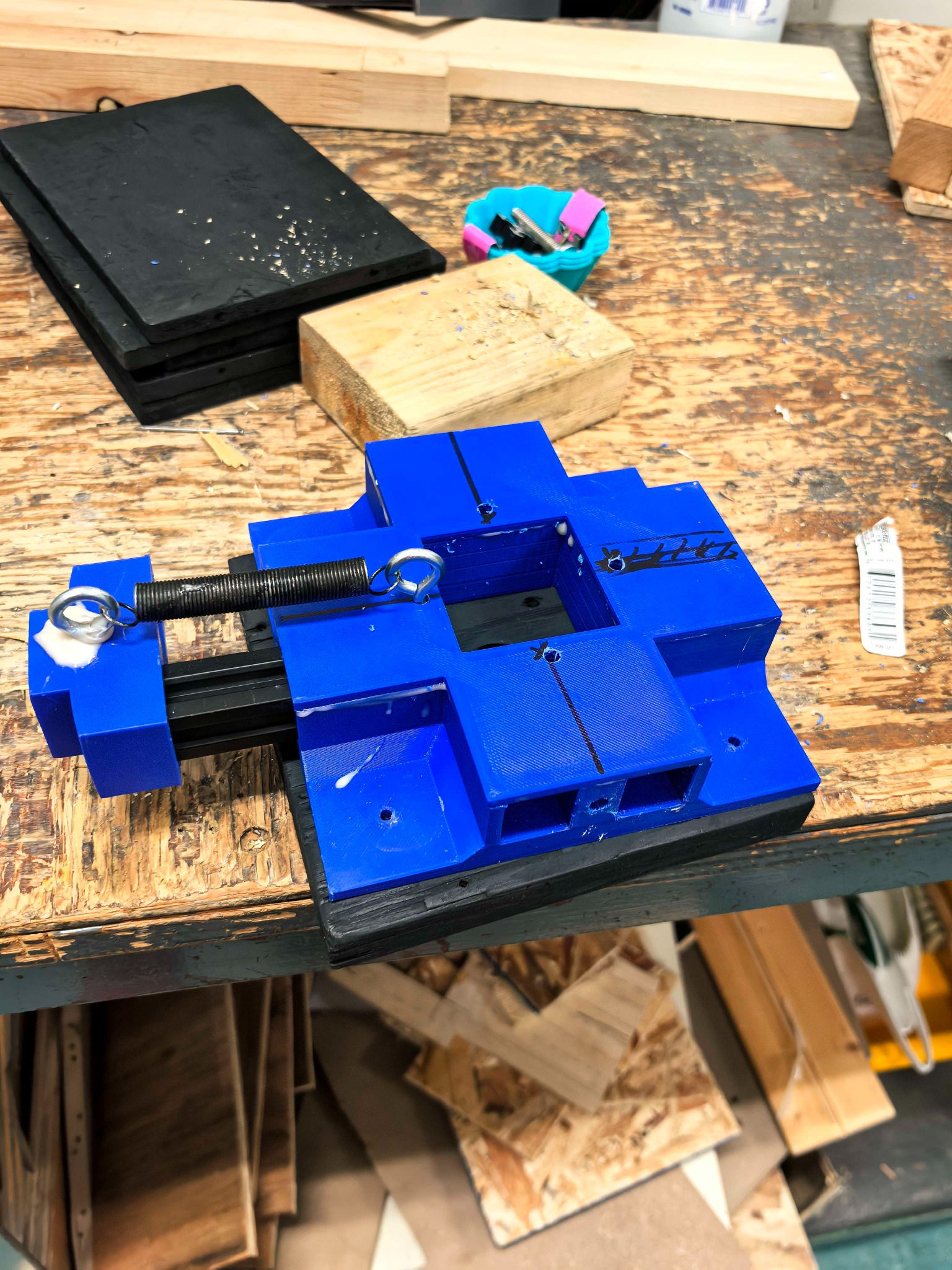
Designed the chassis in Autodesk Inventor using a lightweight wooden frame, extruded aluminum legs, and 3D-printed ABS adapters.
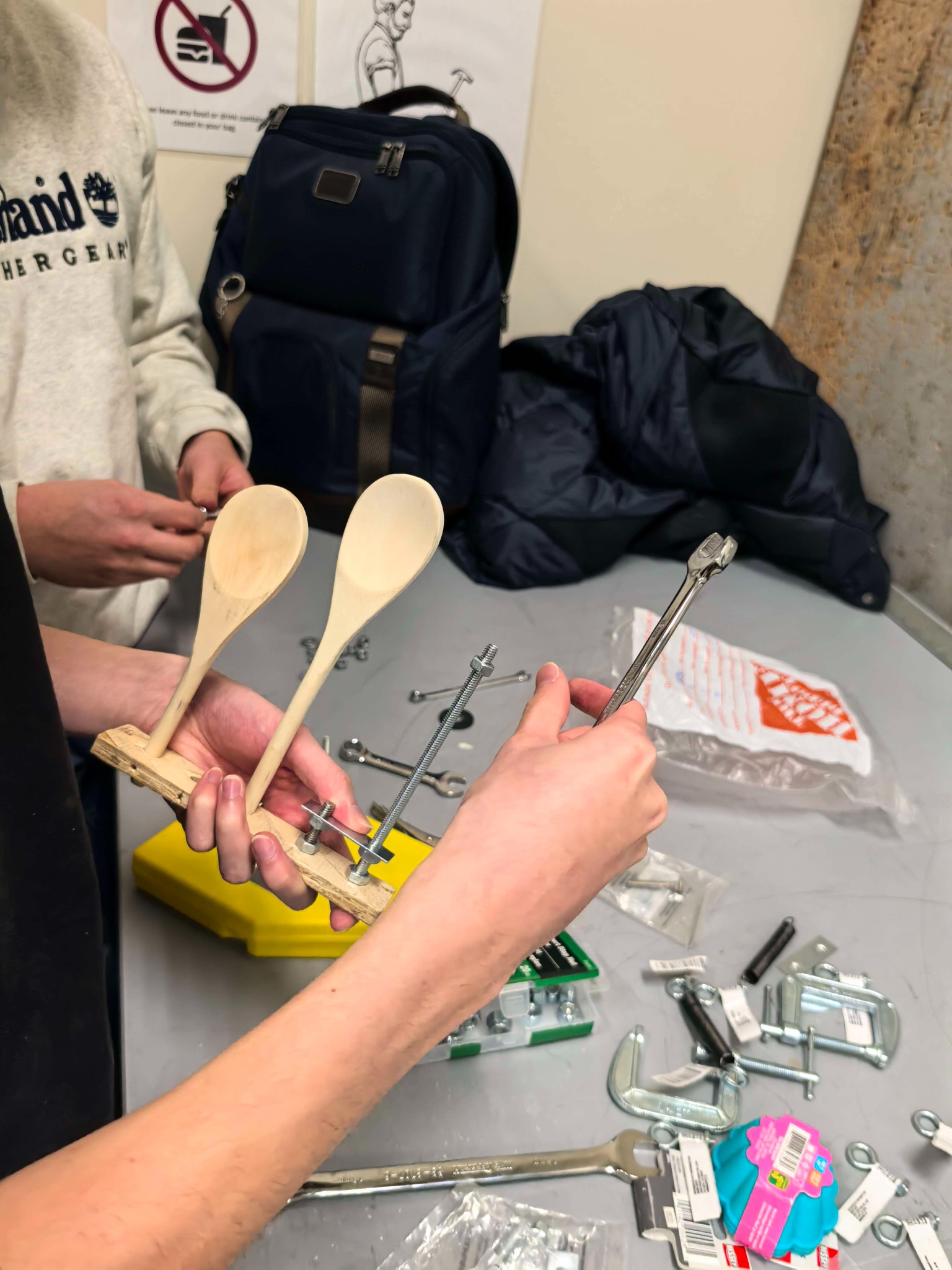
Developed an adjustable mounting system using spring-loaded legs and screw-tightened C-clamps to secure the robot to different pot sizes.
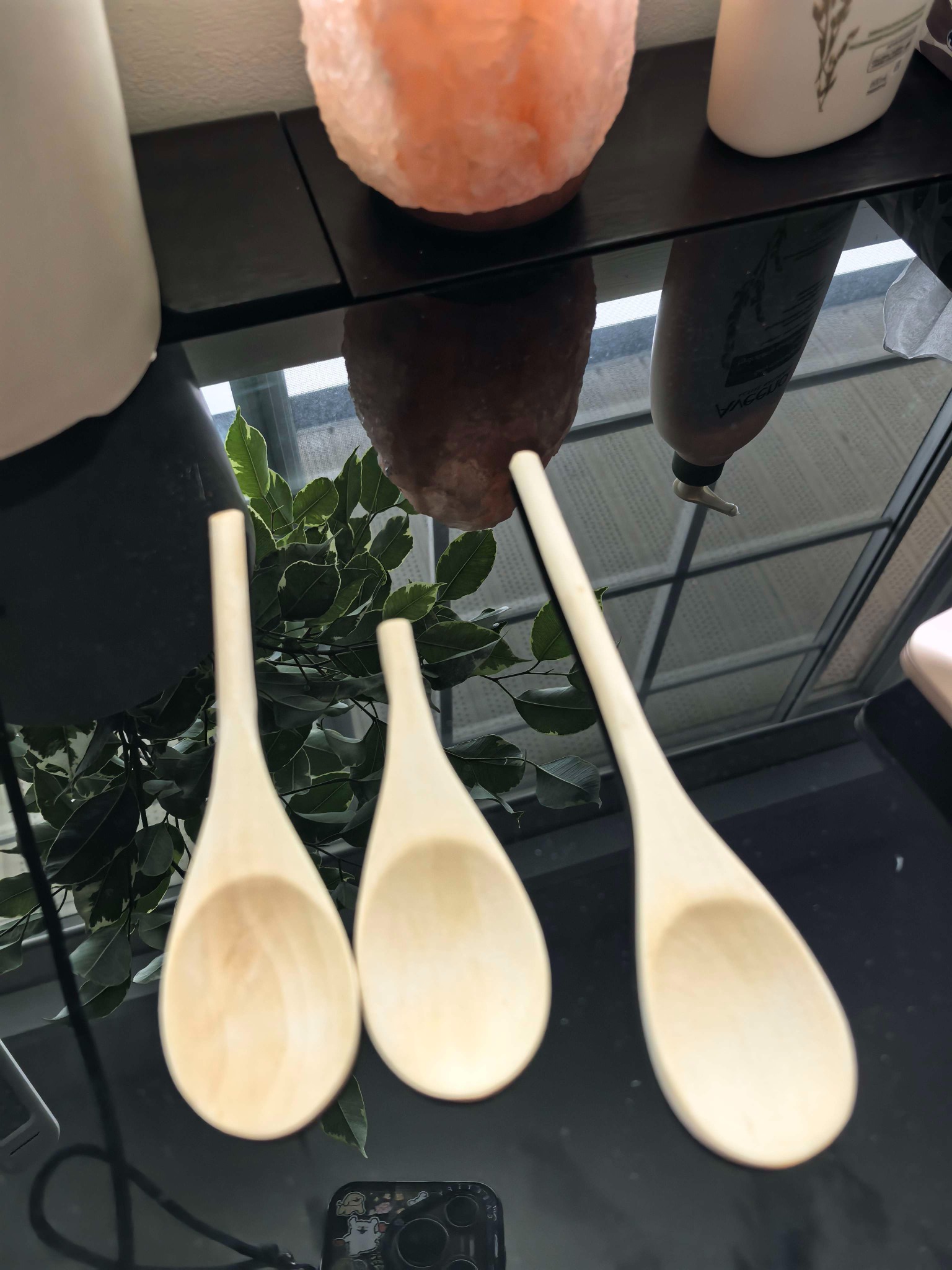
Integrated a motor-driven rotating platform with an offset, slotted spoon attachment to generate circular stirring motion.
Redesigned and reprinted ABS adapters to resolve dimensional tolerance issues and improve mechanical fit and stability.
Electrical Integration & Motor Control
Integrated an Arduino microcontroller, motor driver, electric motor, battery supply, infrared receiver, and master power switch.
Implemented C++ motor control using an infrared remote to adjust stirring speed and rotational direction.
Troubleshot electrical integration challenges involving power-supply compatibility and component connections.
Testing & Results
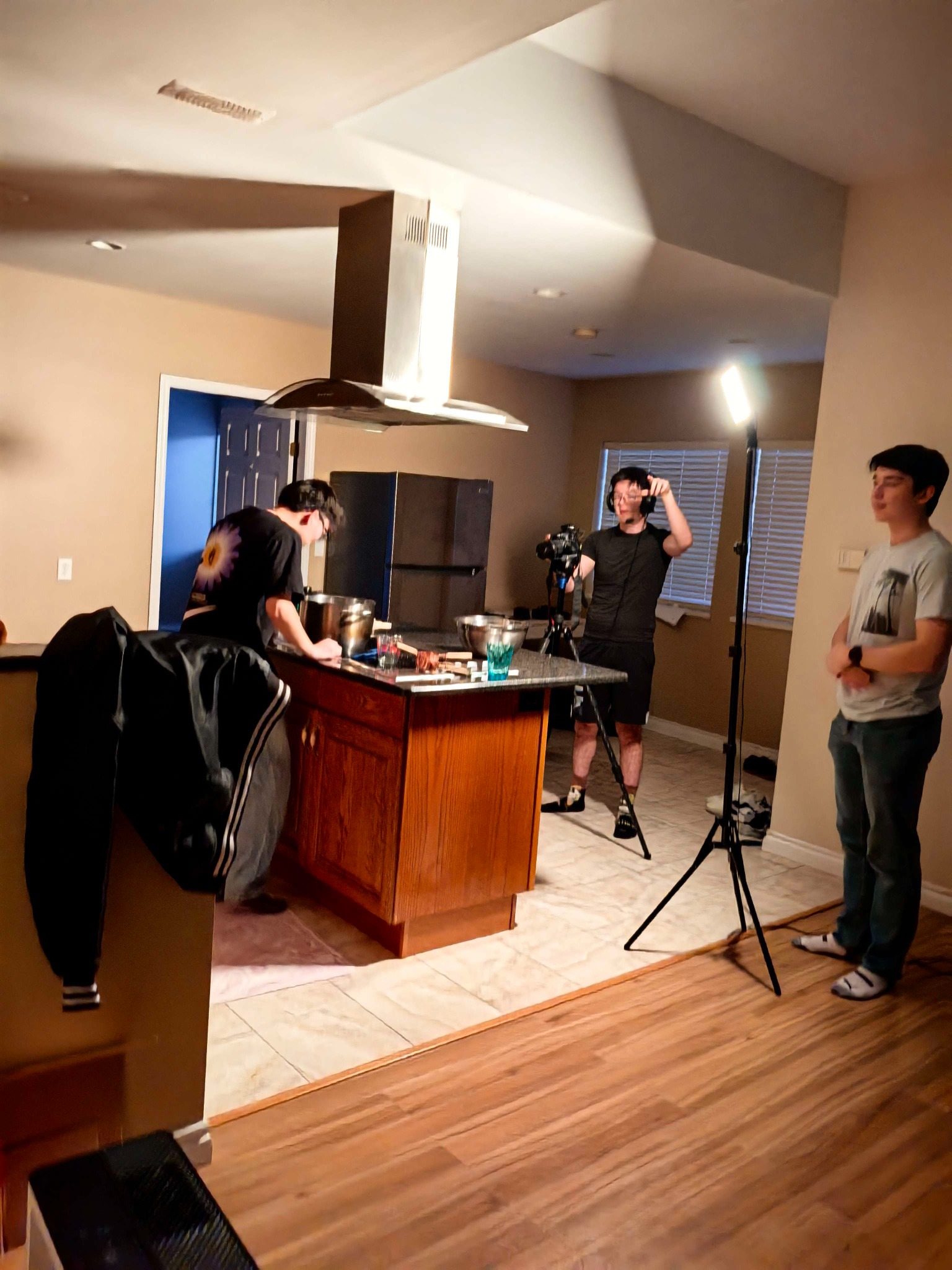
Assembled and tested a functional prototype using actual food to validate the stirring mechanism and mounting system.
Demonstrated adjustable stirring speed, bidirectional motor control, and secure attachment to a cooking pot.
Gained experience in CAD design, additive manufacturing, mechanical assembly, electrical integration, and iterative prototyping.
As part of UBC Formula SAE’s Aerodynamics Team, I’m working on the design and optimization of the front wing for the 2026–2027 competition car. My main focus is the middle section, where I’m investigating airfoil profiles, chord lengths, and angles of attack to reduce trailing-edge flow separation, minimize unwanted vortex formation, and improve downstream airflow.
Using SolidWorks and Siemens STAR-CCM+, I’m developing and analyzing wing geometries to understand how design changes affect aerodynamic performance.
AerodynamicsAirfoilsSolidWorksSTAR-CCM+
Research Projects
▧ADD YOUR LINKEDIN OR PROJECT IMAGE
PLANT SCIENCE · INDEPENDENT RESEARCH
Clone Zone
This nine-month independent research project followed how variegation patterns in Alocasia Bambino Albo change and stabilize through tissue culture. Cloned plantlets were repeatedly subcultured under sterile in-vitro conditions to explore how propagation relates to albino variegation expression.
Findings from this work were presented at the Greater Vancouver Regional Science Fair.
Tissue cultureAroidsIndependent research
▧ADD YOUR LINKEDIN OR PROJECT IMAGE
PLANT SCIENCE · RESEARCH
Inducing Somaclonal Variation in Aroids Using Callus Culture
This project investigates callus culture as a method for inducing variegation in aroid species. After callus tissue forms, regenerated shoots can exhibit somaclonal variation, including changes in pigment distribution and chloroplast development.
This research explores breaking down cellulose in cotton-based textile waste into glucose through acid hydrolysis. The follow-up paper discusses the method, experimental results, infrared-spectroscopy analysis, and future research directions.
The project looks at a possible route for reducing textile waste and turning end-of-life material into a useful starting point for food or bio-based products.